
Words: Hein Eksteen | Photography: Michel dei-Cont & supplied
The town of De Rust (Dutch for The Rest) may once have been a place of rest for ox wagon trekkers before they tackled the challenging nearby Swartberg gorge – the Swartberg Pass was only completed in 1888 long after the first of these intrepid souls crossed over from the Little Karoo into Central Karoo in search of albeit less greener pastures, but wide open spaces.

A current intrepid soul is worth mentioning. Rob Still, the owner of De Rustica Olive Estate, did not come here to outspan and rest on his laurels. Rather produce local and international award-winning olive oil, one of which was recently lauded as the best and healthiest in the world.
Rob is a business person from Johannesburg who resides in Knysna and therefore Ryan Westcott, De Rustica’s Sales and Marketing Manager, takes the stage. By the way, Ryan hails from Graaf-Reinet, the sixth oldest town in the country, and the starting place of the Great Trek – a frontier town then and to this day one gets the feeling the residents are always ready to break out and seek new horizons. Ryan is no exception.
“Until 2003 this farm was a series of 47 smaller farms, each with its own title deed. Rob had a dream to produce olives and amalgamated the 47 into one farm.”
The first groves were established in 2006 and the first yield followed in 2010. The first proper yield came in 2012.
“Rob enjoys the finer things in life and olive oil is certainly one of them. Although olive farming can be challenging, he has been very successful in other fields and at that time olive farming was something innovative and different to do in the South African agricultural sphere.”
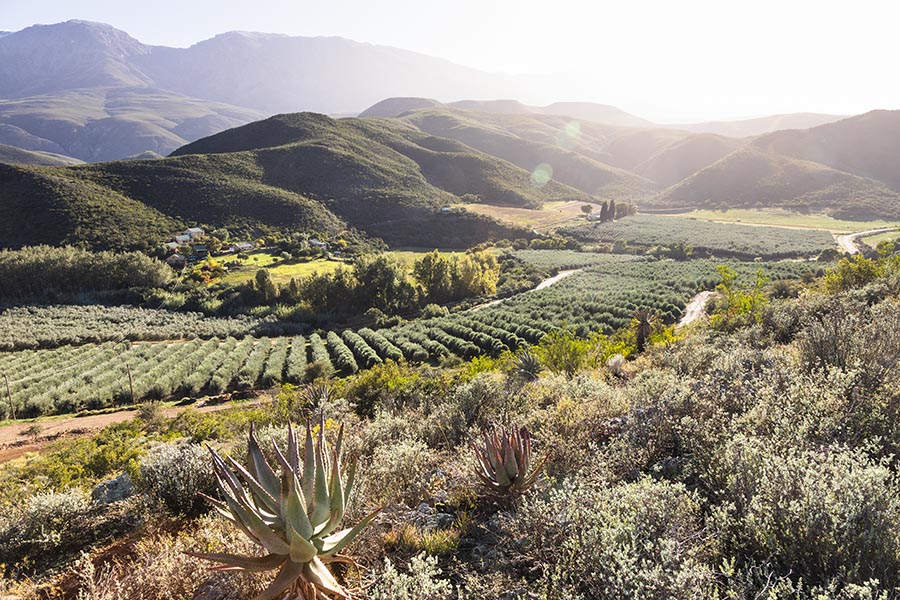
As with other kinds of real estate, location is the catchword when it comes to olive farming. And De Rustica lies in a small area with an abundance of water and just the right micro-climate.
“Firstly, our water is exceptional because it is rainwater which comes directly from the mountain and all of the 19 dams on the farm are interconnected and gravity fed. The main dam into which all the others feed holds around 300 million litres. This helps tremendously with our water control. We use drip irrigation and each tree receives 30 litres per day.”
Initially the trees were planted too densely, but the number has been reduced from 80 000 to 72 000. New cultivars are also being experimented with to see which will produce the best fruit.
With olives you need a certain number of cold units to in-crease your yield of oil per olive. The microclimate provides the cold and hot units when needed. The cold units determine the yield of oil.
“So, if we don’t have the cold units we need this year, next year our crop will be lower. This year we expect a good yield as we had the right number of cold units last year.”

Having an almost perfect microclimate and high quality and quantity run-off water (which is probably clean enough to be bottled) surely puts De Rustica is a position to side-step most challenges. Not so. The farm’s water supply is obviously dependent on rainfall and therefore periods of drought have a massive negative impact. Of course, olive trees are hardy semi-desert plant and will survive droughts, but they will not produce fruit in a commercially viable way.
Chemical fertiliser is another very costly factor. Although De Rustica does not produce organic olives, it is something they are moving towards. The problem being that the farm’s soil needs to be weaned off the non-organic fertilisers and this takes years to accomplish.
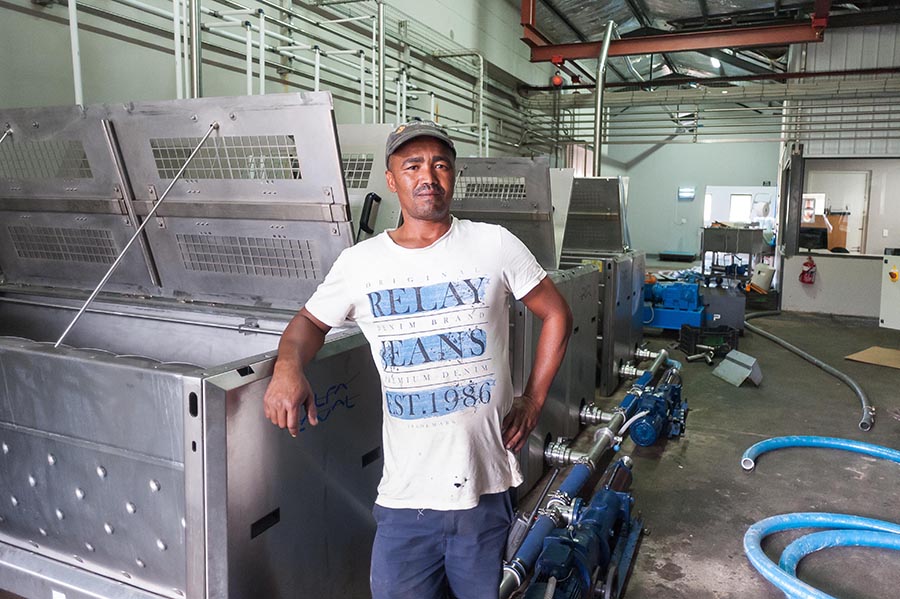
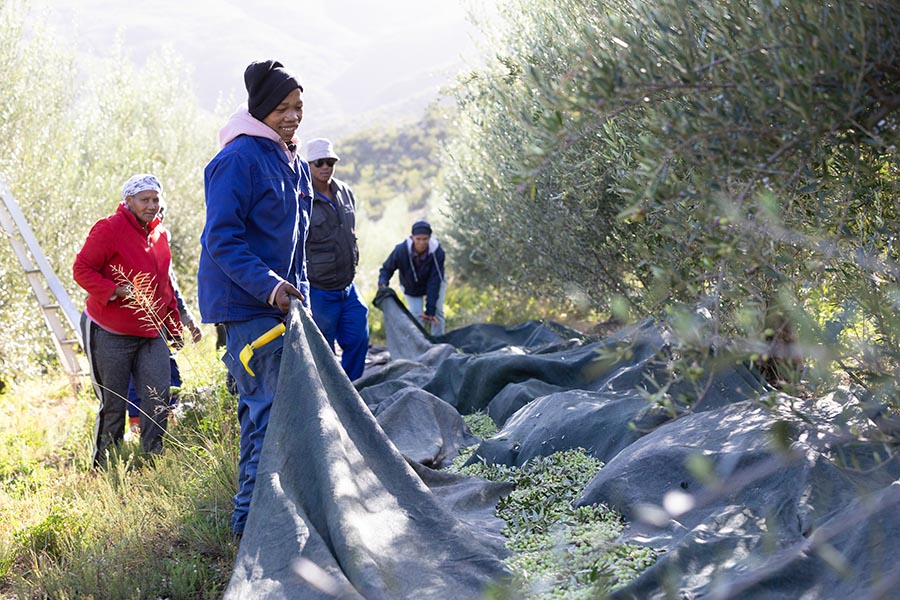
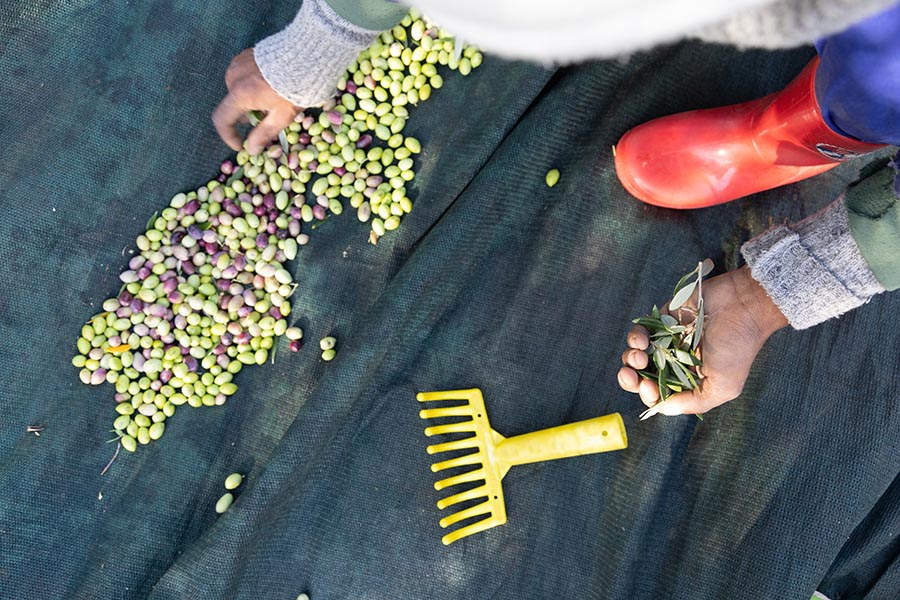
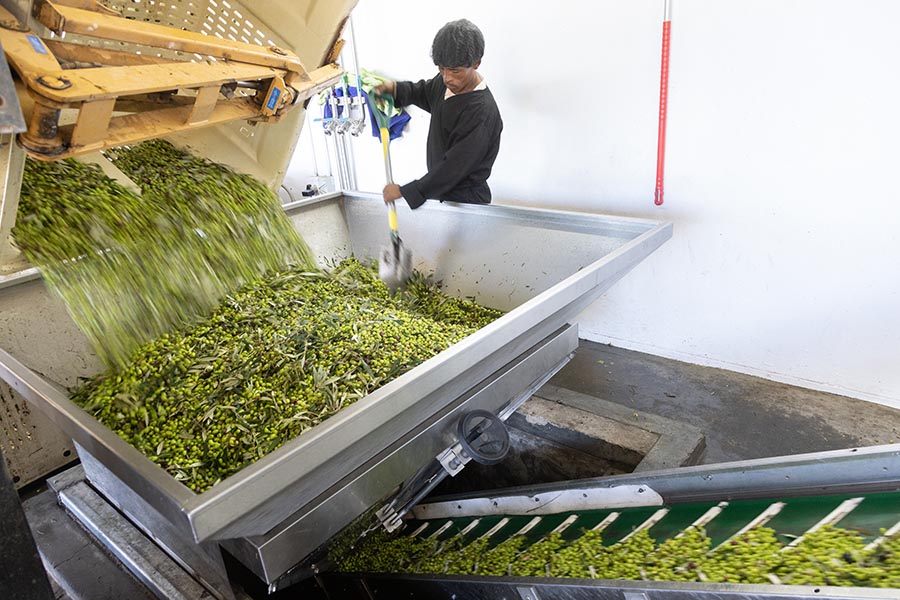
“Labour can be an issue. Luckily we now have a great team. But it is also worth noting that we harvest manually, because Rob is adamant that we will not jeopardise the livelihood of the around 200 seasonal workers we employ for months every year.”
It is most often cheaper to import olive oil from Spain, Italy and even Greece than to produce it locally. These foreign countries produce vast quantities and can therefore decrease their prices. In South Africa and some other countries olive oil production is regulated and to qualify as extra virgin producers need to adhere to stringent testing. Unregulated countries can put whatever they want into their bottles, market them at bargain prices and local producers have to compete with that.
“It is the same as with champagne and cognac. If we don’t adhere to these tests your oil becomes only virgin, or olive oil, or no longer fit for human consumption.”
One man’s death is another man’s breath, and this adage may be applied to the European olive producing countries as they were recently subjected to severe droughts. Their production costs almost doubled and made it easier for South Africa to export there at a lower price.
Theft is not really problem, because people in this part of the country haven’t cottoned on to the fact that they can actually steal olives and use them. Birds don’t really eat them, because they are so bitter. A few small diseases which they spray for.
It is most often cheaper to import olive oil from Europe than to produce it locally.
And then there is the challenge of educating the South African public as to quality versus price. Being a developing country teetering on the brink of being a failed state (some experts believe we are already failed), even the more wealthy is forced to compare prices when it comes to what could be considered as a luxury item.

“That said, people are becoming increasingly aware of the health benefits of olive oil.”
De Rustica do not regularly export, although they do have a small importer in the USA. The reason for this is fluctuating annual volumes. To commit to high volume foreign importers, the exporter needs to be certain of consistent volume.
“For example, last year we got 35 000 litres out. The year before we got 230 000 out. And this year probably 200 000. The huge drop 2022 was due to poor farming practices by the previous management, but now we are back on track.”
The failed export infrastructure in the country’s harbours is yet another disaster.
Eskom is of course a colossal problem. Solar was installed and further installations will follow the combat the issue.
“We are fortunate in this way, because De Rustica is big enough to be able to afford this unexpected capital outlay. But the smaller farmers who don’t have the money to develop alternative energy, will suffer. It is extremely difficult to run a business under these circumstances. That extra expense eats directly into your profit margin.”
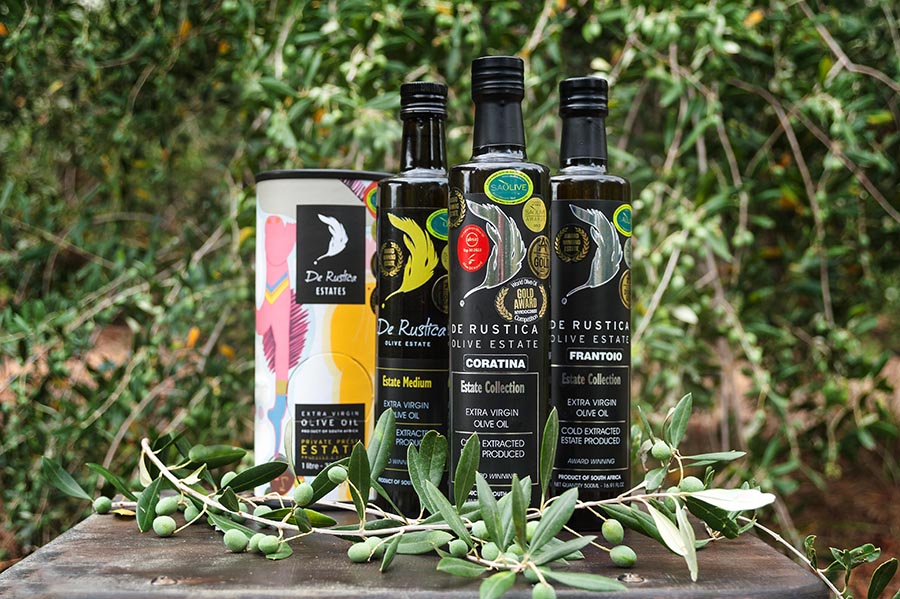
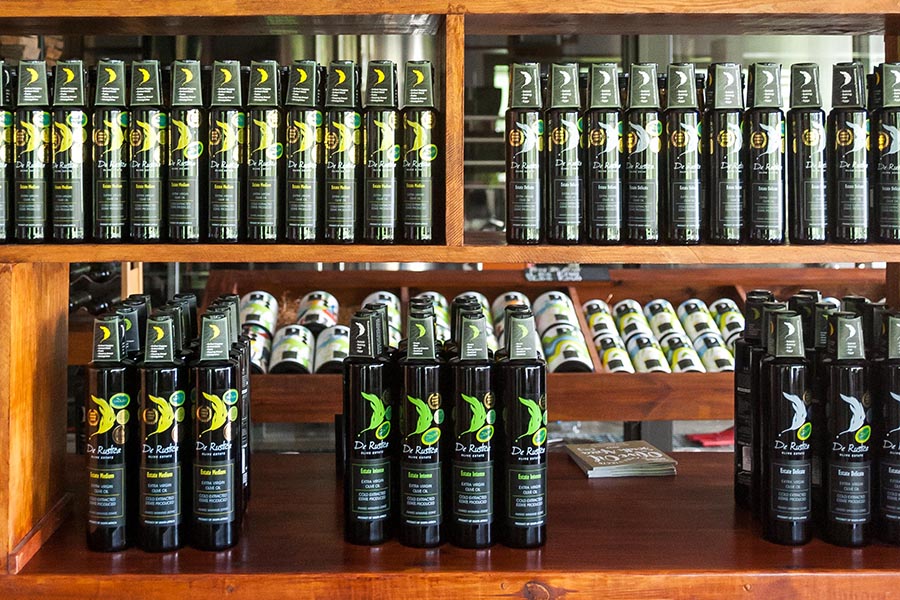
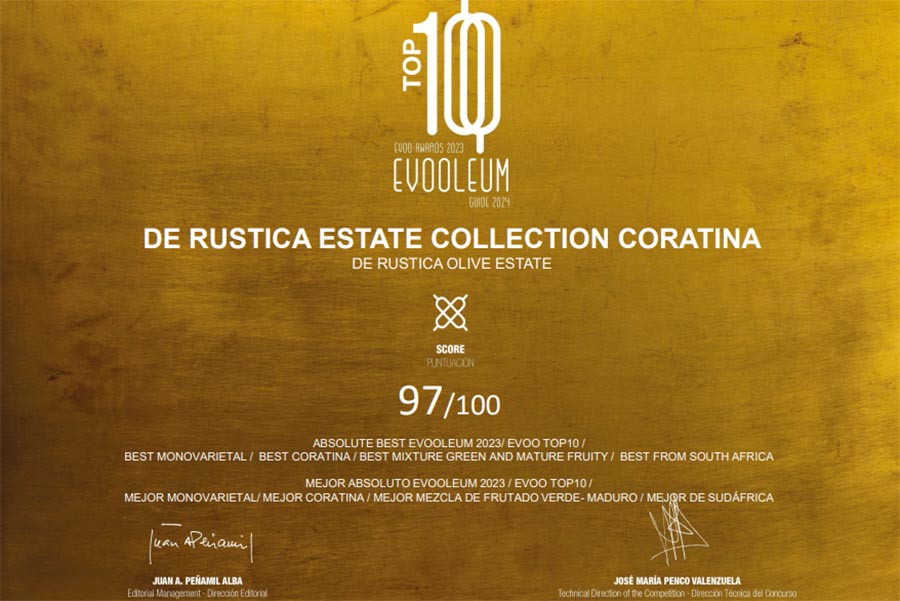
Back to the momentous award mentioned earlier. This year De Rustica Estate Collection Coratina was regarded as the best at the international Evooleum Awards in Spain – basically the best olive oil in the world over all categories and scoring 97 points out of a 100. And this in Spain, the country which produces half of the world’s olive oil. The fact that this year’s best oil does not hail from Spain or Italy is a historical first.
De Rustica may not be big on exporting olive oil, but the farm certainly competes abroad.
“We often enter international competitions as a marketing tool. We have competed in Japan, Greece, London, Canada and the States. These days we prefer the one in New York, that one being to more popular and recognised international awards. We continuously receive gold for our Coratina, which we have done for the past six years. You can call Coratina our flag ship cultivar on the farm.”
The obvious question is why take part in these foreign competitions while the farm does not export to those very markets?
This year De Rustica Estate Collection Coratina was regarded as the best at the international Evooleum Awards in Spain.
“Because we like to have that golden stamp of approval on our products. To tell you an interesting story. We annually have a Spanish expert come over to help us with our blending. Last year he cheekily sneaked a bottle of our oil into his suitcase – which he didn’t tell us about – and entered it in what is called the Evooleum Awards in Spain. It was voted as the best and healthiest oil in the completion. And the only producer not in the Mediterranean basin. Which is quite impressive.”
De Rustica also consistently and successfully competes in the SA Olive Awards. “We are very lucky on the one front, but also very frustrated on another.”
Traditionally olives are produced from however many cultivars, blended together and the producer has the product.
“But we focus on various different products, ranging from an intense, a delicate to a medium. When you have all these different products you certainly win lots of awards, but you also sit with all the different kinds, some of which are less popular than others and you have to market them all.”
Ryan has no problem with marketing his more problematic products. Having been raised in an agricultural environment surrounding a mischievously frontier town, having lived abroad and studied marketing, he has the innate skills to break down oppressive barriers and seek the wide open spaces of new opportunities.
NAME: De Rustica Olive Estate | OWNER: Rob Still | AREA: De Rust | CONTACT: De Rust Tel: 044 241 2177 www.derustica.co.za